

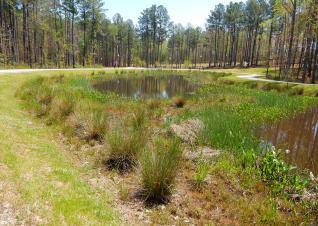
Built wetlands, also known as constructed, artificial, or treatment wetlands, are water treatment systems built with wetland soils and vegetation to mimic the ecological and biophysical processes that improve water quality in natural wetlands.
Nicholas Institute for Environmental Policy Solutions
Nature-Based Solutions Strategy Search
Other searches:
Find case studies →
Find tools and resources →
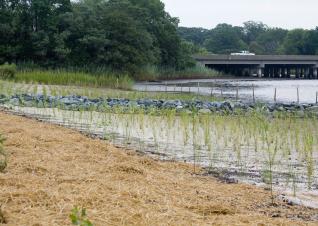
Coastal marshes, also frequently called salt marshes, are partially flooded wetlands that are inundated by salt water brought in by the tides but can vary in salinity levels.
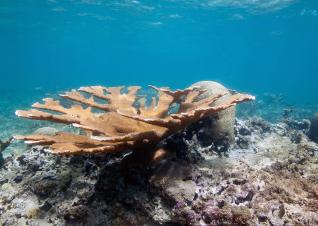
Coral reefs are the skeletons of marine invertebrates called coral, which form large underwater structures comprised of colonies.
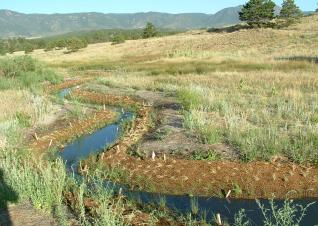
A floodplain is a low-lying area directly adjacent to a waterbody and partially or fully flooded during high-water events.
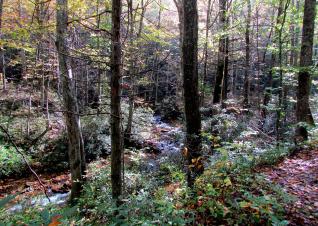
Forests provide food, fuel, oxygen, clean water, erosion control, and health benefits to people.
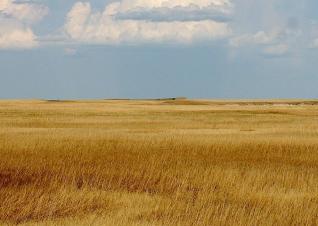
Grasslands, often called prairies in the United States, are habitats where the dominant vegetation type is grass.
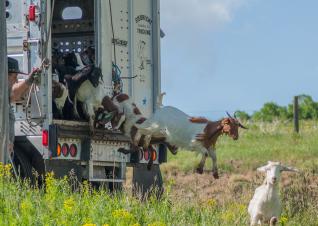
An invasive or nuisance pest is a species that causes harm to humans or the environment. This strategy focuses on invasive plant species.
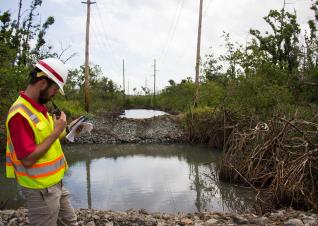
Mangrove ecosystems are a form of coastal wetlands found in tropical and subtropical regions. These systems support halophytic (salt-loving) trees, shrubs, and other plants, and are dominated by mangrove trees.
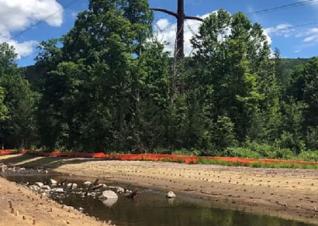
Nontidal wetland restoration is the rehabilitation of a degraded wetland so that its hydrology, vegetation, and ecological processes approximate, to the extent possible, the original natural condition prior to modification.
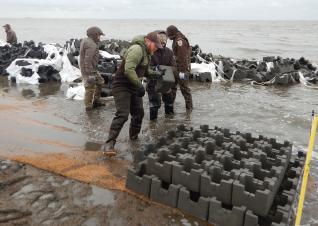
Oysters are a cornerstone of coastal ecosystems and fisheries, providing structural protection to the coast as well as improving water quality.

Prescribed burns are fires that are intentionally set in a controlled manner in accordance with specified weather limitations, laws, policies, and regulations.
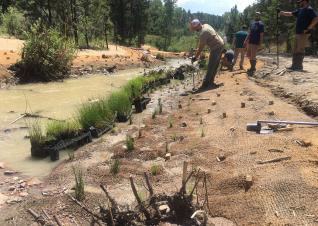
Riparian buffers are vegetated areas adjacent to an inland waterbody that are managed to protect the waterbody from the impacts of surrounding land uses.
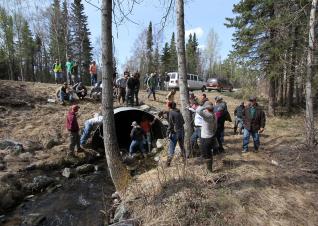
A riverine system is a watershed-scale network of integrated aquatic habitats and hydrological processes.
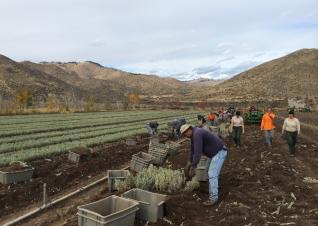
Sagebrush habitats exist across the western United States in areas with hot, dry summers and cool, moist winters. They are dominated by big sagebrush (Artemisia tridentata) vegetation and perennial grasses.
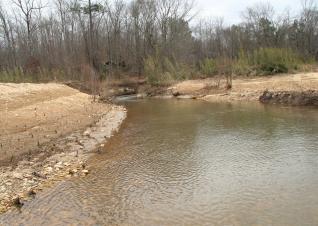
A stream, also known as a branch, creek, run, or brook, is a continuous surface flow of freshwater within a channel that is smaller than a river. Headwater streams can originate from groundwater (springs), runoff, or a wetland.
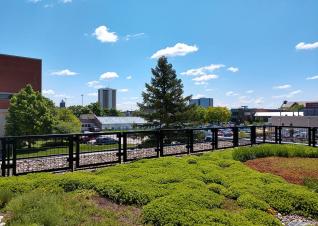
Urban greening is a general term used to describe efforts to renature urban areas by installing various types of green infrastructure.
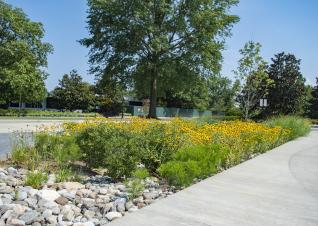
Strategies for urban stormwater and runoff management such as rain gardens, stormwater parks, permeable pavement, and bioswales are intended to reduce these issues by promoting water retention, infiltration, and evapotranspiration instead of runoff.
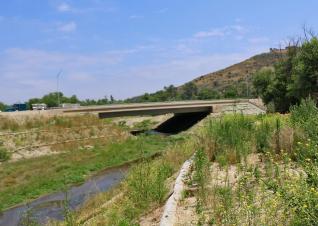
Wildlife road crossing structures are infrastructure built with the joint goals of increasing habitat connectivity across roads and reducing wildlife–vehicle collisions.